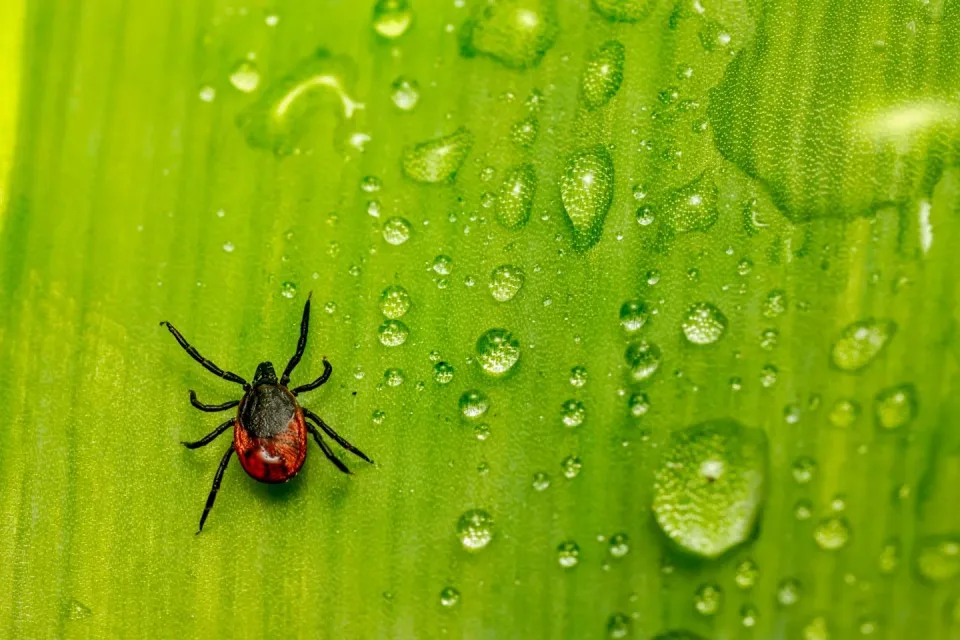
What Should Concord Owners Do About Ticks on Pets?
If you find a tick on your pet after a yard walk, remove it carefully and check the animal’s whole body. Use fine-tipped tweezers close to the skin, pull steadily, and avoid crushing the tick; contact your veterinarian about your pet’s health or preventive care. Ticks can remain active during mild winter periods, so a warm spell is not a reason to skip checks.
Near the New Hampshire State House in Concord, owners returning from walks should inspect pets before they settle onto furniture. Coastal Portsmouth’s maritime temperature moderation can also mean outdoor activity continues through milder stretches, so keep a comb and tweezers handy.
Our crew can assess outdoor tick pressure and explain whether professional yard treatment is appropriate.
What Should You Check After a Yard Walk?
Ticks found on pets after yard walks call for a prompt, calm inspection, not a whole-yard pesticide application. Run your hands slowly over the coat, then check around the ears, eyelids, collar, toes, and under the tail; use a comb to part longer fur.
If you find an attached tick, use fine-tipped tweezers, grasp close to the skin, and pull upward with steady pressure. Clean the bite area and your hands, and save the tick in a sealed container if a veterinarian advises identification.
Do not apply household insecticide to your pet. The CDC recommends talking with a veterinarian about tick prevention suited to the animal and local risks.
Does Yard Treatment Protect Pets by Itself?
No yard application replaces a careful pet check or veterinary prevention. At Canobie Lake Park in Salem, people may think about ticks as a trail-side concern, but pets can pick them up in ordinary outdoor spaces too.
A practical yard review looks for leaf litter, tall grass, brush, and places where pets spend time; reducing dense ground cover can make those areas easier to inspect. Heavy rainfall can flood crawlspaces and basements, but that is a separate moisture issue not proof that ticks are breeding indoors.
We focus outdoor recommendations on the conditions and pest activity we actually observe, rather than treating a home’s interior without a reason.
When Should You Call a Tick Control Pro?
Do-it-yourself checks make sense when you find an occasional tick on a pet and can safely remove it. Consider professional assessment when ticks keep appearing, several pets are affected, or you cannot identify where activity is coming from.
On the Nashua River Rail Trail, a tick encounter may follow a single outing; repeated findings at home call for a closer look at the property’s edges and pet-use areas. Dartmouth College in Hanover is another reminder that New Hampshire residents move between towns and outdoor settings, so a tick found after a walk does not automatically locate the source.
We can inspect the yard, discuss targeted options, and explain any product directions and precautions before work begins.
What Changes Around Coastal Homes?
A property near the coast still needs a case-by-case inspection. Nor’easters bring coastal wind, rain, and snow, which can change ground cover and make outdoor work less practical until conditions settle.
Around Portsmouth Harbor and the Piscataqua River, tell us where pets usually walk and rest; that helps focus the inspection instead of treating every area equally. We also ask whether ticks have been found repeatedly or just once, and whether a veterinarian has recommended pet prevention.
Keep the distinction clear: a yard service addresses outdoor pest conditions, while a veterinarian advises on the animal’s health. Our Tick Control team can explain what we observed and how any proposed work fits the property.
Which Tick Check or Yard Option Fits Your Pet?
Choose based on whether you found a tick on the animal, keep finding them at home, or want help assessing outdoor conditions.
| Option | Best for | Key detail |
|---|---|---|
| Pet check after a walk | Finding an attached tick early | Part the coat and check ears, toes, collar, and tail area. |
| Veterinary guidance | Prevention or a pet health concern | Ask your veterinarian which prevention fits your pet. |
| Yard inspection | Repeated ticks found at home | Identifies where activity and pet use overlap. |
| Targeted tick treatment | Ongoing outdoor activity | A professional can explain the treatment area and label precautions. |
At Hampton Beach State Park, outdoor exposure may be part of a day out, while Monadnock State Park trips can involve different terrain; neither outing alone identifies a home infestation. Snow accumulation can obstruct foundation inspections, so do not mistake a limited winter property view for a complete yard assessment.
Spring snowmelt can expose basement moisture problems, but that does not establish an indoor tick source. Share where and when ticks were found so the next step addresses the actual concern.
How Do You Handle a Tick Found After a Walk?
A tick turns up on your dog after a walk, and you are unsure whether to pull it or wait. If it is attached, remove it carefully with tweezers and contact your veterinarian with questions about the bite or prevention.
-
Keep the pet still: Move to a well-lit spot and have another adult gently steady the animal if needed.
-
Inspect the coat: Check the ears, collar line, toes, and tail area, parting fur with a comb.
-
Remove an attached tick: Grip close to the skin with fine-tipped tweezers and pull upward steadily.
-
Clean and record: Clean the bite area and note when and where you found the tick.
-
Ask your veterinarian: Discuss pet-specific prevention and any health changes that concern you.
-
Review repeated findings: If ticks keep appearing at home, note pet routes and request a yard assessment.
Summer thunderstorms may disturb outdoor nests, so wait until yard conditions are safe before inspecting dense vegetation. If you walk near the White Mountain National Forest, check your pet afterward rather than relying on the outing’s location to predict risk.
White Mountain elevations receive heavier snowfall, which can limit access to some outdoor areas; ask when inspection can be done safely. Squam Lakes Natural Science Center, Holderness, is another outing where a post-walk check is a sensible routine.
Should You Call for Tick Help Near Mount Sunapee?
A careful pet check is the first step; repeated ticks at home are a reason to look more closely at the yard. In Manchester, the Manchester Millyard is a familiar reminder that local environments differ from a Mount Sunapee State Park outing, so the property itself matters when choosing a response.
If you visit the Strawbery Banke Museum in Portsmouth, check your pet when you return rather than assuming a tick only comes from remote trails. Our crew can inspect outdoor areas and explain a targeted plan in plain language.
Tell us where ticks turn up and how often. For a property assessment, contact New Hampshire Pest Pros about Tick Control and ask what preparation, if any, your yard needs.